Men's Basketball
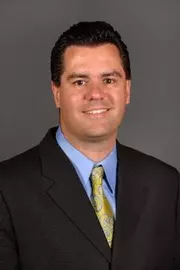
Tom Moore
- Title:
- Head Men's Basketball Coach
In a program long defined by achievement, Tom Moore has placed his own imprint of success on Bobcat basketball in his eight seasons at the helm of the Quinnipiac University men’s basketball program. Under his dynamic stewardship, which includes four national postseason appearances and numerous individual accolades, Quinnipiac has established its place on a national stage.
During his career spanning over two decades as either an assistant or head coach at the NCAA Division I collegiate level, Moore has compiled a career mark of 492-229 (.682), needing eight wins to reach 500 as a Division I coach. Including his seven years at the Division III level, Moore has been a part of 593 coaching victories over 29 seasons and has an aggregate career mark as an assistant coach and a head coach of 593-317, nearly a 2:1 ratio of wins to losses, while his head coaching mark stands at 228-188, including nine years at Quinnipiac (152-129) and five at Division III Worcester State (76-59).
Under Moore’s tutelage, the Bobcats made three straight national postseason appearances (NIT, CIT, and CBI) from 2009 to 2011, and then tacked on a fourth one with a second bid to the CIT in 2014. He was named the CollegeInsider.com Northeast Conference Coach of the Year in 2009, Jim Phelan Northeast Conference Coach of the Year in 2010, and was selected to the New England Basketball Hall of Fame’s Class of 2013.
Moore has guided the Bobcats to an average of 17 wins in his nine years at the helm, including an average of 20 over a five-year stretch from 2009-2014. That stretch featured three campaigns with at least 20 wins (2009-10, 2010-11 and 2013-14), with a high of 23 during the 2009-10 season. He amassed an overall record of 143-108 (.570) in his first eight years at Quinnipiac through the end of the 2014-15 season, eclipsing the 100-win plateau in his sixth season against instate rival CCSU on January 24, 2013. Moore reached the milestone faster than any Quinnipiac Division I men’s basketball coach and became the second fastest in program history.
Moore led Quinnipiac to an unprecedented 23 victories in 2009-10, guiding the Bobcats to the program’s first-ever NEC Regular Season Championship and national postseason tournament berth (NIT). Justin Rutty was named the program’s first-ever NEC Player of the Year. Rutty and James Feldeine were also named to the all-league first team.
A year later, Moore led the Bobcats to a 22-10 record and a home game in the CollegeInsider.com Postseason Tournament. Rutty was named to the All-NEC First Team for the third straight year, while James Johnson joined him among the league’s top five players, giving Moore back-to-back years with a pair of All-NEC First Team members. In the 2011-12 season, Moore spearheaded the Bobcats to an 18-14 record and a trip to the CBI Postseason Tournament. James Johnson and Ike Azotam were selected to the All-NEC Second Team, while Ousmane Drame was named to the All-NEC Rookie Team. Drame became Quinnipiac’s all-time freshman leader in rebounds and blocked shots in his rookie season.
In its final season as a member of the Northeast Conference in 2012-13, Quinnipiac made its eighth straight appearance in the NEC Tournament. Quinnipiac earned 10 or more regular season wins in all six seasons – a distinction that no other NEC team shared with the Bobcats. He was 70-38 during his stint with the NEC, which ranked him eighth all-time in winning percentage among coaches with multiple seasons at an NEC institution. Azotam was named all-league for the second straight year, making the Bobcats one of three schools to place a player on the all-conference team in each of those seasons.
Moore and the Bobcats opened a new chapter in 2013-14, playing their first season in the Metro Atlantic Athletic Conference (MAAC), and had similar success. The Bobcats posted a 20-12 record, its third 20-win season in the last five years, and notched a 14-6 mark in MAAC play. Quinnipiac garnered third place in the league standings and advanced to the MAAC Tournament Semifinals – its fifth conference semifinals appearance in the last six years. The 20-win season was rewarded with a bid into the CIT Tournament.
Three student-athletes – Ike Azotam, Ousmane Drame and Zaid Hearst – collected All-MAAC laurels at season’s end. Azotam was bombarded with accolades including being named to the USBWA All-District Team, the first player in program history to earn that distinction. Azotam closed out his career with 1,043 rebounds and 1,605 points, joining Rutty as the second 1,000-point, 1,000-rebound player since 2011. Drame followed suit in 2014-15 and became the third player under Moore to reach 1,000 points and 1,000 rebounds, setting new Division I records for blocks and rebounds. Hearst (first team) and Drame (second team) both earned All-MAAC selections after their senior seasons as well.
A large part of the Bobcats’ success in recent years has been their prowess on the glass. Quinnipiac has established itself as a national power in rebounding, evidenced by its consistency in the major rebounding categories, leading the country in at least one rebounding statistic for six straighy tears through 2015-16. In 2013-14, Quinnipiac led the nation in total rebounding, offensive rebounding, defensive rebounding, and rebounding margin – something which no other NCAA Division I team had ever accomplished before. Quinnipiac also led the nation in offensive rebounding for four straight seasons from 2010-11 through 2013-14, while leading the nation in rebounding margin in 2013-14 and 2014-15 (after finishing second the year before in 2012-13).
The team recognition on the glass has brought impressive individual accomplishments as well furing the Moore Era. Rutty, the NEC’s all-time career rebounding leader finished second in the nation in offensive rebounds per game (4.9) in back-to-back seasons in 2008-09 and 2009-10. Azotam surpassed Rutty’s QU Division I Rebounding record (1,043) and finished fifth in the nation in offensive rebounding and double-doubles in his last season. Drame ranked ninth nationally in total rebounding and 11th in offensive rebounding as a junior, and then jumped to sixth in the nation in rebounding as a senior, despite averaging less than 30 minutes per game, and also passed Azotam’s Division I career rebounding mark with 1,108. Drame became the first Bobcat to ever be chosen to compete at the Portsmouth Invitational predraft camp.
In the classroom, Moore led the greatest turnaround of any team in NCAA Division I during his first three years as head coach. According to a study prepared by FoxSports.com’s Jason Belzer, the Bobcats increased their Academic Progress Rate (APR), as compiled by the NCAA, by 219 points, more than any other program in the nation in that time. Over the last eight years, Quinnipiac has boasted tremendous success academically among teams in the NEC and the MAAC as well. At the end of the 2010-11 school year, the Bobcats accumulated the highest team GPA in the league, and recently earned the NABC Team Excellence Award with a 3.2 collective team GPA for the 2013-14 season. Every four-year player who has played for Moore at Quinnipiac has graduated, including all seven members of the Class of 2015.
In 2008-09, Moore was named the CollegeInsider.com Northeast Conference Coach of the Year. Quinnipiac upset No. 4 Long Island in the NEC Tournament on the Blackbirds’ home court before losing to eventual NEC Tournament Champion Robert Morris.
Moore was introduced as the Quinnipiac men’s basketball coach on March 29, 2007, making him the sixth head coach in the 62-year history of the team. Moore came to Hamden with two decades of collegiate coaching experience, including 13 years as a member of the coaching staff at the University of Connecticut. During his time in Storrs, Conn., Moore helped build UConn into a national powerhouse and played a major role in guiding the Huskies to the 1999 and 2004 NCAA Division I Men’s National Championships. Moore received accolades from several prominent sportscasters, such as Dick Vitale, Sean McDonough and Len Elmore, recognizing him as a top head coaching prospect for several years. Moore had also been mentioned by such national outlets as ESPN, Sports Illustrated and Fox Sports as a candidate for a wide range of head coaching positions over his final several seasons as an assistant at UConn.
Under Hall of Fame head coach Jim Calhoun, Moore also helped lead perennially nationally ranked UConn to a 340-100 overall record in 13 seasons, as well as eight Big East regular-season titles, five Big East tournament crowns, and 12 straight national postseason tournament bids (1995-2006).
In his first seven years at UConn, his duties centered on the development of game strategy, practice planning and the organization of the Jim Calhoun Basketball Camp. In April 2001, Calhoun promoted Moore and his responsibilities then shifted more towards recruiting over the next three seasons. On October 10, 2005, Moore was named UConn’s associate head coach, a title he carried for his last two seasons in Storrs.
Recognized as one of the top recruiters and evaluators of talent in the country, Moore either recruited or coached numerous current/former NBA players including Ray Allen, Richard Hamilton, Emeka Okafor, Ben Gordon, Rudy Gay, Caron Butler, Charlie Villanueva, Marcus Williams, Jake Voskuhl, Kevin Ollie, Hilton Armstrong, Josh Boone, Hasheem Thabeet, Jerome Dyson, Jeff Adrian and AJ Price. The Huskies rank fifth among most active NBA players (14) of any Division I program in the country. UConn’s 2004 recruiting class, which included Villanueva, Williams and Boone, was the consensus No. 1 recruiting class in the nation by every major recruiting publication.
Prior to joining the staff at UConn, Moore served as the head coach at Worcester State College for five seasons (1989-94). At the time of his appointment, he became the youngest (24 years old) head coach of a collegiate program in New England. In his five years at the helm of the Lancers, Moore compiled a record of 76-59, which served, at the time, as the winningest five-year period in the school’s history.
His 1992-93 Worcester Stats club, after posting a record of 19-8, was named the region’s Most Improved Team by the New England Basketball Coaches Association and earned an ECAC Tournament berth. A year later, the 1993-94 team earned a spot in the NCAA Division III National Tournament by defeating Salem State in the MASCAC Tournament Championship Game. The tournament berth marked the first time Worcester State reached the NCAA Tournament in nearly 20 years. At Worcester State, Moore directed a high-scoring, fast-paced style of play, annually ranking WSC among the NCAA Division III leaders in scoring.
Moore also gained coaching experience as an assistant at Division II Assumption College (1988-89) and Worcester State (1987-88). During nearly two decades as either an assistant or head coach at the NCAA Division I collegiate level, Moore has assembled a career mark of 468-193 (.708). Moore began his collegiate coaching career at the age of 22 at Worcester State College under Paul Baker. His responsibilities in his first year were all encompassing including scouting, recruiting and practice planning. After one season there, he moved across town to Division II Assumption College where he worked for head coach Jack Renkens. There he was the New England Prep School recruiting coordinator and worked with the Assumption backcourt players in Renkens’ up-tempo, fast-paced style of play.
A 1987 graduate of Boston University, Moore currently resides in Tolland, Conn. with his wife, Eileen, and three daughters, Elizabeth Rose, Catherine Grace, and Caroline Mary.
During his career spanning over two decades as either an assistant or head coach at the NCAA Division I collegiate level, Moore has compiled a career mark of 492-229 (.682), needing eight wins to reach 500 as a Division I coach. Including his seven years at the Division III level, Moore has been a part of 593 coaching victories over 29 seasons and has an aggregate career mark as an assistant coach and a head coach of 593-317, nearly a 2:1 ratio of wins to losses, while his head coaching mark stands at 228-188, including nine years at Quinnipiac (152-129) and five at Division III Worcester State (76-59).
Under Moore’s tutelage, the Bobcats made three straight national postseason appearances (NIT, CIT, and CBI) from 2009 to 2011, and then tacked on a fourth one with a second bid to the CIT in 2014. He was named the CollegeInsider.com Northeast Conference Coach of the Year in 2009, Jim Phelan Northeast Conference Coach of the Year in 2010, and was selected to the New England Basketball Hall of Fame’s Class of 2013.
Moore has guided the Bobcats to an average of 17 wins in his nine years at the helm, including an average of 20 over a five-year stretch from 2009-2014. That stretch featured three campaigns with at least 20 wins (2009-10, 2010-11 and 2013-14), with a high of 23 during the 2009-10 season. He amassed an overall record of 143-108 (.570) in his first eight years at Quinnipiac through the end of the 2014-15 season, eclipsing the 100-win plateau in his sixth season against instate rival CCSU on January 24, 2013. Moore reached the milestone faster than any Quinnipiac Division I men’s basketball coach and became the second fastest in program history.
Moore led Quinnipiac to an unprecedented 23 victories in 2009-10, guiding the Bobcats to the program’s first-ever NEC Regular Season Championship and national postseason tournament berth (NIT). Justin Rutty was named the program’s first-ever NEC Player of the Year. Rutty and James Feldeine were also named to the all-league first team.
A year later, Moore led the Bobcats to a 22-10 record and a home game in the CollegeInsider.com Postseason Tournament. Rutty was named to the All-NEC First Team for the third straight year, while James Johnson joined him among the league’s top five players, giving Moore back-to-back years with a pair of All-NEC First Team members. In the 2011-12 season, Moore spearheaded the Bobcats to an 18-14 record and a trip to the CBI Postseason Tournament. James Johnson and Ike Azotam were selected to the All-NEC Second Team, while Ousmane Drame was named to the All-NEC Rookie Team. Drame became Quinnipiac’s all-time freshman leader in rebounds and blocked shots in his rookie season.
In its final season as a member of the Northeast Conference in 2012-13, Quinnipiac made its eighth straight appearance in the NEC Tournament. Quinnipiac earned 10 or more regular season wins in all six seasons – a distinction that no other NEC team shared with the Bobcats. He was 70-38 during his stint with the NEC, which ranked him eighth all-time in winning percentage among coaches with multiple seasons at an NEC institution. Azotam was named all-league for the second straight year, making the Bobcats one of three schools to place a player on the all-conference team in each of those seasons.
Moore and the Bobcats opened a new chapter in 2013-14, playing their first season in the Metro Atlantic Athletic Conference (MAAC), and had similar success. The Bobcats posted a 20-12 record, its third 20-win season in the last five years, and notched a 14-6 mark in MAAC play. Quinnipiac garnered third place in the league standings and advanced to the MAAC Tournament Semifinals – its fifth conference semifinals appearance in the last six years. The 20-win season was rewarded with a bid into the CIT Tournament.
Three student-athletes – Ike Azotam, Ousmane Drame and Zaid Hearst – collected All-MAAC laurels at season’s end. Azotam was bombarded with accolades including being named to the USBWA All-District Team, the first player in program history to earn that distinction. Azotam closed out his career with 1,043 rebounds and 1,605 points, joining Rutty as the second 1,000-point, 1,000-rebound player since 2011. Drame followed suit in 2014-15 and became the third player under Moore to reach 1,000 points and 1,000 rebounds, setting new Division I records for blocks and rebounds. Hearst (first team) and Drame (second team) both earned All-MAAC selections after their senior seasons as well.
A large part of the Bobcats’ success in recent years has been their prowess on the glass. Quinnipiac has established itself as a national power in rebounding, evidenced by its consistency in the major rebounding categories, leading the country in at least one rebounding statistic for six straighy tears through 2015-16. In 2013-14, Quinnipiac led the nation in total rebounding, offensive rebounding, defensive rebounding, and rebounding margin – something which no other NCAA Division I team had ever accomplished before. Quinnipiac also led the nation in offensive rebounding for four straight seasons from 2010-11 through 2013-14, while leading the nation in rebounding margin in 2013-14 and 2014-15 (after finishing second the year before in 2012-13).
The team recognition on the glass has brought impressive individual accomplishments as well furing the Moore Era. Rutty, the NEC’s all-time career rebounding leader finished second in the nation in offensive rebounds per game (4.9) in back-to-back seasons in 2008-09 and 2009-10. Azotam surpassed Rutty’s QU Division I Rebounding record (1,043) and finished fifth in the nation in offensive rebounding and double-doubles in his last season. Drame ranked ninth nationally in total rebounding and 11th in offensive rebounding as a junior, and then jumped to sixth in the nation in rebounding as a senior, despite averaging less than 30 minutes per game, and also passed Azotam’s Division I career rebounding mark with 1,108. Drame became the first Bobcat to ever be chosen to compete at the Portsmouth Invitational predraft camp.
In the classroom, Moore led the greatest turnaround of any team in NCAA Division I during his first three years as head coach. According to a study prepared by FoxSports.com’s Jason Belzer, the Bobcats increased their Academic Progress Rate (APR), as compiled by the NCAA, by 219 points, more than any other program in the nation in that time. Over the last eight years, Quinnipiac has boasted tremendous success academically among teams in the NEC and the MAAC as well. At the end of the 2010-11 school year, the Bobcats accumulated the highest team GPA in the league, and recently earned the NABC Team Excellence Award with a 3.2 collective team GPA for the 2013-14 season. Every four-year player who has played for Moore at Quinnipiac has graduated, including all seven members of the Class of 2015.
In 2008-09, Moore was named the CollegeInsider.com Northeast Conference Coach of the Year. Quinnipiac upset No. 4 Long Island in the NEC Tournament on the Blackbirds’ home court before losing to eventual NEC Tournament Champion Robert Morris.
Moore was introduced as the Quinnipiac men’s basketball coach on March 29, 2007, making him the sixth head coach in the 62-year history of the team. Moore came to Hamden with two decades of collegiate coaching experience, including 13 years as a member of the coaching staff at the University of Connecticut. During his time in Storrs, Conn., Moore helped build UConn into a national powerhouse and played a major role in guiding the Huskies to the 1999 and 2004 NCAA Division I Men’s National Championships. Moore received accolades from several prominent sportscasters, such as Dick Vitale, Sean McDonough and Len Elmore, recognizing him as a top head coaching prospect for several years. Moore had also been mentioned by such national outlets as ESPN, Sports Illustrated and Fox Sports as a candidate for a wide range of head coaching positions over his final several seasons as an assistant at UConn.
Under Hall of Fame head coach Jim Calhoun, Moore also helped lead perennially nationally ranked UConn to a 340-100 overall record in 13 seasons, as well as eight Big East regular-season titles, five Big East tournament crowns, and 12 straight national postseason tournament bids (1995-2006).
In his first seven years at UConn, his duties centered on the development of game strategy, practice planning and the organization of the Jim Calhoun Basketball Camp. In April 2001, Calhoun promoted Moore and his responsibilities then shifted more towards recruiting over the next three seasons. On October 10, 2005, Moore was named UConn’s associate head coach, a title he carried for his last two seasons in Storrs.
Recognized as one of the top recruiters and evaluators of talent in the country, Moore either recruited or coached numerous current/former NBA players including Ray Allen, Richard Hamilton, Emeka Okafor, Ben Gordon, Rudy Gay, Caron Butler, Charlie Villanueva, Marcus Williams, Jake Voskuhl, Kevin Ollie, Hilton Armstrong, Josh Boone, Hasheem Thabeet, Jerome Dyson, Jeff Adrian and AJ Price. The Huskies rank fifth among most active NBA players (14) of any Division I program in the country. UConn’s 2004 recruiting class, which included Villanueva, Williams and Boone, was the consensus No. 1 recruiting class in the nation by every major recruiting publication.
Prior to joining the staff at UConn, Moore served as the head coach at Worcester State College for five seasons (1989-94). At the time of his appointment, he became the youngest (24 years old) head coach of a collegiate program in New England. In his five years at the helm of the Lancers, Moore compiled a record of 76-59, which served, at the time, as the winningest five-year period in the school’s history.
His 1992-93 Worcester Stats club, after posting a record of 19-8, was named the region’s Most Improved Team by the New England Basketball Coaches Association and earned an ECAC Tournament berth. A year later, the 1993-94 team earned a spot in the NCAA Division III National Tournament by defeating Salem State in the MASCAC Tournament Championship Game. The tournament berth marked the first time Worcester State reached the NCAA Tournament in nearly 20 years. At Worcester State, Moore directed a high-scoring, fast-paced style of play, annually ranking WSC among the NCAA Division III leaders in scoring.
Moore also gained coaching experience as an assistant at Division II Assumption College (1988-89) and Worcester State (1987-88). During nearly two decades as either an assistant or head coach at the NCAA Division I collegiate level, Moore has assembled a career mark of 468-193 (.708). Moore began his collegiate coaching career at the age of 22 at Worcester State College under Paul Baker. His responsibilities in his first year were all encompassing including scouting, recruiting and practice planning. After one season there, he moved across town to Division II Assumption College where he worked for head coach Jack Renkens. There he was the New England Prep School recruiting coordinator and worked with the Assumption backcourt players in Renkens’ up-tempo, fast-paced style of play.
A 1987 graduate of Boston University, Moore currently resides in Tolland, Conn. with his wife, Eileen, and three daughters, Elizabeth Rose, Catherine Grace, and Caroline Mary.
Friday, February 06
Wednesday, January 21
Monday, November 24
Tuesday, September 30